
The Delhi High Court has ruled that an undertrial's prolonged incarceration cannot be a reason to grant bail in terrorism cases, emphasizing the gravity of such offenses and their potential to destabilize the nation. The court denied bail to separatist leader Nayeem Ahmad Khan in a terror-funding case involving Lashkar-e-Taiba (LeT) and 26/11 Mumbai attack mastermind Hafiz Saeed. The court considered the accused's argument regarding a prolonged trial and his right to liberty but emphasized that the serious nature of the crime, with its potential to disrupt national unity and create fear among the public, outweighs the length of incarceration. Khan, who was arrested in 2017, has been accused of conspiring for secession of Jammu and Kashmir through terrorist activities, receiving funding from Pakistan, and organizing anti-India rallies and demonstrations. The court highlighted the evidence, including witness statements and documents, supporting the accusations against Khan.

The Supreme Court on Friday upheld JSW Steel's Rs 19,700-crore resolution plan for debt-ridden Bhushan Power and Steel Limited (BPSL), bringing down curtains to a prolonged legal battle that spanned nearly eight years.
In a huge relief, an appellate court in Qatar has commuted the death sentence of eight former Indian Navy personnel, arrested in an alleged case of espionage in August 2022.

The Supreme Court has ruled that motor vehicle tax is not applicable if a vehicle is not used or kept for use in a 'public place'. The ruling came on an appeal challenging a judgement of the Andhra Pradesh High Court.

The Supreme Court of India has quashed a fine imposed on political analyst Tehseen Poonawalla by the Punjab and Haryana High Court for mocking Jain monk Tarun Sagar. The top court criticized the high court for engaging in "moral policing" and imposing a fine despite acquitting Poonawalla. The high court had argued that the fine was necessary to deter others from mocking religious leaders. The Supreme Court disagreed, stating that courts should not be involved in moral policing.

Tahawwur Rana, accused in the 2008 Mumbai terror attacks, has renewed his application to the US Supreme Court seeking a stay of his extradition to India. The Supreme Court will hear the application next month. Rana, currently detained in Los Angeles, claims his extradition would violate US law and expose him to torture in India due to his health and Muslim background. The US government has denied these claims and authorized his surrender to India, citing the Extradition Treaty between the two countries. The Supreme Court's decision will determine if Rana will face justice in India or remain in the United States.
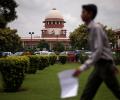
The Supreme Court has deleted its critical observation against Allahabad High Court judge Prashant Kumar, clarifying that it did not intend to embarrass or cast aspersions on him. The decision follows a request from Chief Justice B R Gavai to reconsider the matter.

The GST Council has set up a Group of Ministers, chaired by Haryana Deputy Chief Minister Dushyant Chautala, to suggest required changes in the law for setting up the GST Appellate Tribunal (GSTAT). The GST Council, chaired by Finance Minister Nirmala Sitharaman and comprising state ministers, had last week decided to constitute a Group of Ministers (GoM) to address various concerns raised by states in relation to constitution of the GSTAT. As per the Terms of Reference (ToR) of the GoM, the panel would recommend required amendments in the GST law to ensure that the legal provisions maintain the right federal balance and are in line with the overall objective of uniform taxation within the country.

The Tamil Nadu government has urged the Supreme Court to dismiss the Presidential reference concerning the Governor's powers to assent to bills, arguing it is an 'appeal in disguise' to overturn settled law.
The Supreme Court of India has ruled that maternity leave is a fundamental right and cannot be denied to a woman based on the number of children she has from previous relationships. The court overturned a Madras High Court decision that had denied maternity leave to a Tamil Nadu government school teacher who had two children from a previous marriage. The Supreme Court emphasized the importance of reproductive rights, including maternity benefits, as part of international human rights law. The court also highlighted the right to life under Article 21 of the Indian Constitution, which includes the right to health, dignity, and reproductive choice. The decision has significant implications for women's rights and reproductive healthcare in India.

The Singapore International Arbitration Centre (SIAC) has awarded Rs 23.7 crore in damages, besides arbitration and litigation costs, to Amazon in its long-running dispute with the Kishore Biyani-led Future Group. The three-member bench of the tribunal held that Future Group had breached the terms of its contract with Amazon by entering into a transaction with Reliance.

In a significant development, the Supreme Court on Thursday recalled its controversial May 2 verdict that had ordered liquidation of Bhushan Power & Steel Limited (BPSL) while setting aside a resolution plan of JSW Steel Limited for the ailing firm. A bench comprising Chief Justice B R Gavai and Justice Satish Chandra Sharma observed that the May 2 judgment, authored by Justice Bela M Trivedi, since retired, did not "correctly consider the legal position as has been laid down in the catena of judgments".

The famous 'tareekh pe tareekh' dialogue from the Hindi movie Damini captures where we are now.

Section 498A of the IPC provides the punishment for the husband or the relative of the husband of a woman who subjects her to cruelty.

'Vigilance' is a dreaded term for PSB employees and there are instances where this fear is misused by the higher authorities to tame their subordinate officials. This fear always deters PSB executives from making decisions -- the fewer the decisions, the less the chance of falling into trouble, points out Tamal Bandyopadhyay.

The Supreme Court's ruling in the BPSL case exposes deep flaws in the IBC's institutional framework and raises concern about judicial overreach, notes Rajeswari Sengupta.
The Supreme Court of India has ruled that the offence of abetment of suicide should not be invoked mechanically against individuals, emphasizing that the provision should not be used to soothe the feelings of grieving families. The court stressed that the conduct of the accused and the deceased, their interactions, and conversations preceding the death should be examined practically and not divorced from real-life contexts. The judgment came after a plea challenging an order of the Madhya Pradesh High Court that refused to discharge a man from charges under Section 306 of the Indian Penal Code (IPC) related to a suicide case. The Supreme Court emphasized that to prove abetment of suicide, there must be evidence of active instigation or acts facilitating the suicide. In this case, the court found that the appellant's actions, including seeking repayment of a loan, did not constitute instigation to suicide.
The Supreme Court of India has ordered the burial of a pastor whose body has been lying in a mortuary since January 7th, after a dispute arose regarding the location of his burial. The court issued a split verdict, with one judge ruling for burial on the family's private land and the other for a designated place away from the village. The decision was made due to the prolonged delay in the burial and the potential for unrest. The court ordered the state government to provide security to prevent any further incidents.

The Supreme Court on Friday said the trial court's finding that Aam Aadmi Party leader Manish Sisodia was responsible for delaying the trial in the Delhi excise policy cases was not supported by the record.

President-elect Donald Trump announced a slate of key Cabinet nominations, including tapping former Democratic presidential candidate Robert F. Kennedy Jr. as his Secretary of Health and Human Services and former Congressman Doug Collins of Georgia as Secretary for Veterans Affairs. Trump also named Jay Clayton as US Attorney for the Southern District of New York, Todd Blanche as Deputy Attorney General, and Dean John Sauer as Solicitor General of the United States.

The National Stock Exchange (NSE) has offered to pay Rs 1,388 crore to the Securities and Exchange Board of India (Sebi) to settle the colocation and dark fibre cases, potentially clearing the way for its much-awaited initial public offering (IPO). This is the biggest-ever settlement plea made with the markets regulator.

Khedkar is accused of misrepresenting information in her application for the 2022 UPSC civil services examination for availing reservation benefits. She has refuted all the allegations against her.
The Allahabad high court has observed that 'protection of a person' from being charged in 'marital rape continues in cases where the wife is of 18 years of age or more'.

The Supreme Court of India has criticized the Uttar Pradesh government and Prayagraj Development Authority for the demolition of homes in the city, calling the actions "inhuman and illegal." The court ordered the authority to pay Rs 10 lakh compensation each to the homeowners, stating that the demolitions were carried out in a "high-handed" manner without following due legal process. The petitioners, whose homes were demolished, argued that the state government wrongly believed the land belonged to gangster-politician Atiq Ahmed. The Allahabad High Court had previously rejected their plea challenging the demolition.

The Supreme Court of India has ordered a status quo on a private well located near the entrance of the Sambhal Jama Masjid, prohibiting any action regarding the well without its permission. The order came in response to a plea by the mosque's management committee, which challenged a lower court order that allowed a survey of the mosque, citing concerns over violence and loss of life during previous surveys. The court also instructed the authorities to file a status report within two weeks.
The Supreme Court of India ordered the release of a man who had spent 25 years in prison for murder, ruling that he was a juvenile at the time of the crime. The court found that the convict, Om Prakash alias Raju, had been wrongly convicted due to errors by the courts in determining his age. The case highlights the importance of proper age verification and the need for courts to actively ensure the fair treatment of juveniles within the legal system.

The Supreme Court of India has ruled that informing an accused of the grounds for their arrest is not a formality but a mandatory constitutional requirement. The court declared the arrest of Vihaan Kumar, who was accused of financial fraud, as unconstitutional and ordered his immediate release. The ruling emphasizes the importance of procedural safeguards in criminal law and highlights the fundamental rights of arrested individuals. The court also expressed disapproval of the police's treatment of Kumar, including handcuffing and chaining him while he was in the hospital.

A former chemistry professor sentenced to life imprisonment for killing her husband by electrocution has challenged the autopsy report in the Madhya Pradesh high court, arguing the case based on her own knowledge of the subject.

The Telangana High Court upheld a trial court's verdict handing out death penalty to five senior operatives of banned terror outfit, Indian Mujahideen, involved in a bomb blast that left 18 people killed in 2013. The court dismissed the criminal revision appeal filed by the IM operatives while upholding the NIA court's judgment. The five members, including IM co-founder Mohd Ahmed Sidibapa alias Yasin Bhatkal, Pakistani national Zia-ur-Rahman alias Waqas, Asadullah Akhtar alias Haddi, Tahaseen Akhtar alias Monu and Ajaz Shaikh, were convicted in 2016. The special court for NIA cases here awarded capital punishment to five convicts treating it as a rarest of the rare case. The high court, after conducting a detailed hearing in the appeals filed by the convicts, confirmed the death sentence of the five IM operatives.
The Supreme Court of India has expressed concern over the erosion of the family institution, stating that people in India, while valuing the concept of 'vasudhaiva kutumbakam' (the world is one family), are failing to maintain unity even within their immediate families. This observation came in a case involving a dispute between a mother and her eldest son over property and family relations.

The Supreme Court on Friday directed a Sambhal trial court to temporarily halt proceedings in the case over the Mughal-era Shahi Jama Masjid and its survey at Chandausi while directing the UP government to maintain peace and harmony in the violence-hit town.

Sexual intercourse, including unnatural act, by a man with his adult wife, even without her consent, can not be treated as an offence, the Chhattisgarh high court held while acquitting a Jagdalpur resident who was convicted of rape and other charges.

Merging tribunals may lead to administrative convenience, but pendency of cases is likely to increase

The Supreme Court of India has criticized the Uttar Pradesh government for its "high-handed" demolition of homes in Prayagraj, ordering the reconstruction of the demolished structures. The court expressed concern over the manner in which notices were served and the swiftness of the demolition, stating that it "shocks our conscience." The court has allowed the reconstruction of the homes at the petitioners' expense, provided they file appeals and do not claim ownership of the land. The matter has been adjourned to allow the petitioners to file undertakings.

The Bangladesh Supreme Court has stayed a High Court verdict that declared 'Joy Bangla' as the country's national slogan, effectively reversing the decision. The government, which had moved to suspend the High Court's ruling, argued that the national slogan is a matter of policy and not subject to judicial interference. This decision comes amid political turmoil in the country, with the recent change of government and a focus on revising national symbols and holidays.

The Supreme Court of India has ordered the Union government to grant a permanent commission to a woman officer in the Army Dental Corps who was denied benefits given to similarly placed officers. The court ruled that the woman officer was wrongly excluded from consideration and that the principle of "what is sauce for the goose ought to be sauce for the gander" applies in this case. The court directed the government to implement the order within four weeks and to extend all consequential benefits, including seniority, promotion, and monetary benefits, to the officer.
The appellant argued though he was held guilty of indulging in preparatory acts for the commission of a terrorist act and recruiting persons for terrorist act, there was no evidence to show he committed such acts.
The Supreme Court of India has said that mere harassment is not sufficient to hold someone guilty of the offence of abetting suicide, and there must be clear evidence of direct or indirect incitement.
The Supreme Court of India has reprimanded a Karnataka High Court judge for passing an inconsistent verdict, highlighting the crucial importance of consistent judicial outcomes for maintaining public trust. The court emphasized that inconsistent decisions from different benches undermine faith in the judiciary and can lead to "forum shopping" and other unethical practices.

The Supreme Court of India has ruled that religious conversions undertaken solely to avail reservation benefits without genuine belief in the adopted religion amount to "fraud on the Constitution". The court upheld a Madras High Court decision denying a scheduled caste certificate to a woman who converted to Christianity but later claimed to be a Hindu to secure employment benefits.
